by Michael Luce
Photos By: Clark Clifford // Photography Assistant #1: Harrison Trinca // Photography Assistant #2: Jacob Judkins // Executive Producers: Celene Anderson & Zach Collier // Creative Director & Stylist: Erin Snider // Hair & Makeup: Jenny Kimble // Featurette Director: Barrett Burgin
To be seen deeply is a truly terrifying experience.
The confession of those parts of you that rarely, if ever, see the light, can be harrowing, no matter if it’s by one person or multiple. Paradoxically, it’s this discomfort with being seen that has prompted artists to create some of their most popular works. Musicians from David Bowie to Tyler, The Creator have shared deeply introspective works on the topic, and echoes of this fear of overexposure can be seen in everything from Bo Burnam’s Inside to Black Mirror. One of my personal music heroes, the late Neil Peart of Rush, was infamous for his avoidance of attention, often leaving venues on his motorcycle before the show had even concluded.
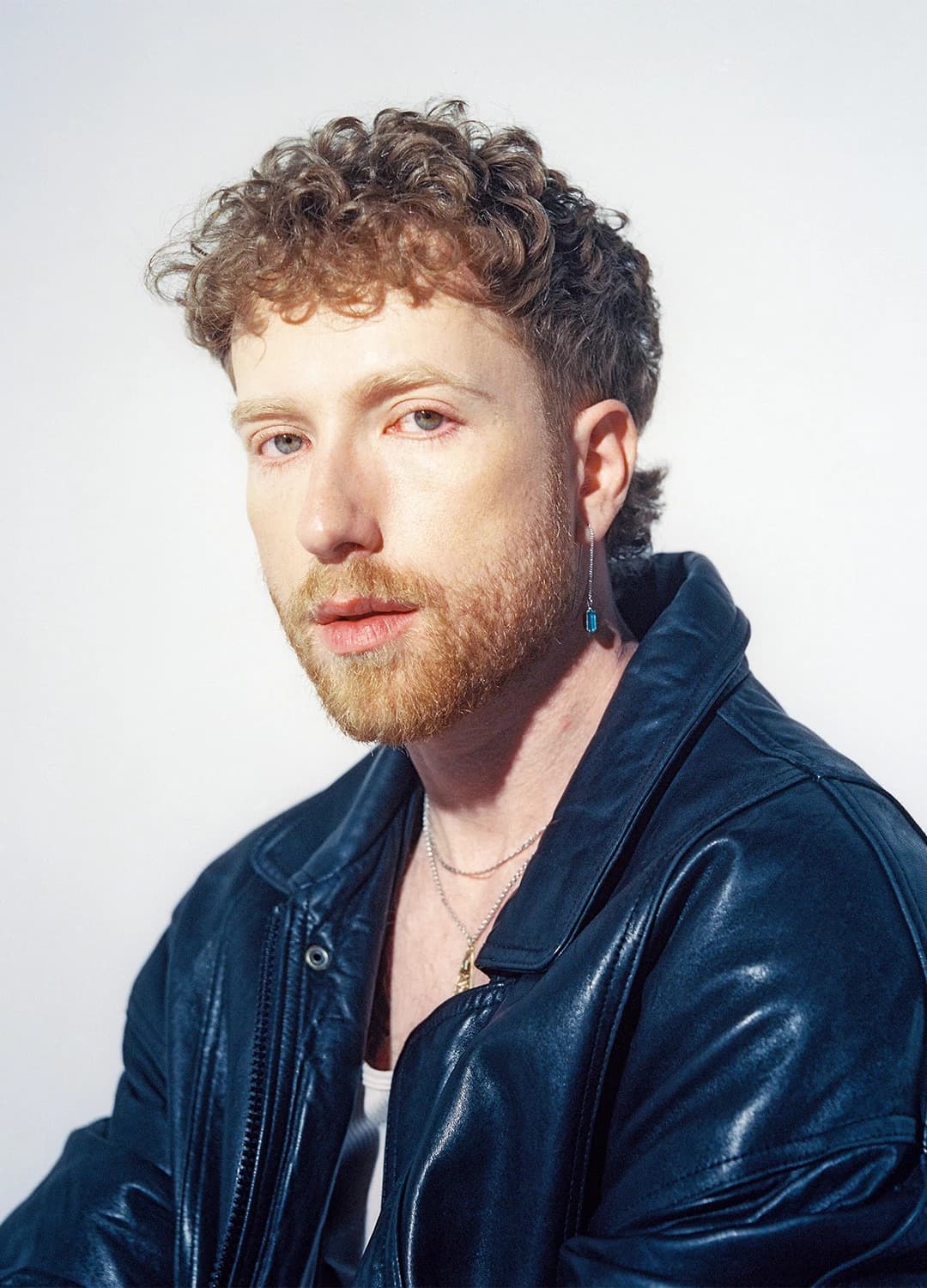
But this isn’t the case for JP Saxe. Whereas this discomfort with being seen is something that causes most to squirm, he thrives in it, relishing the chance to be known for who he is. Many writers have characterized JP as “vulnerable” and “brave” for sharing so much of his heart on his sleeve, but I think these descriptions just barely miss the core essence of JP Saxe. While nearly every artist is familiar with the uncomfortable, JP has made it his safe space, his playing grounds. He isn’t just familiar with the feeling, he embraces it.
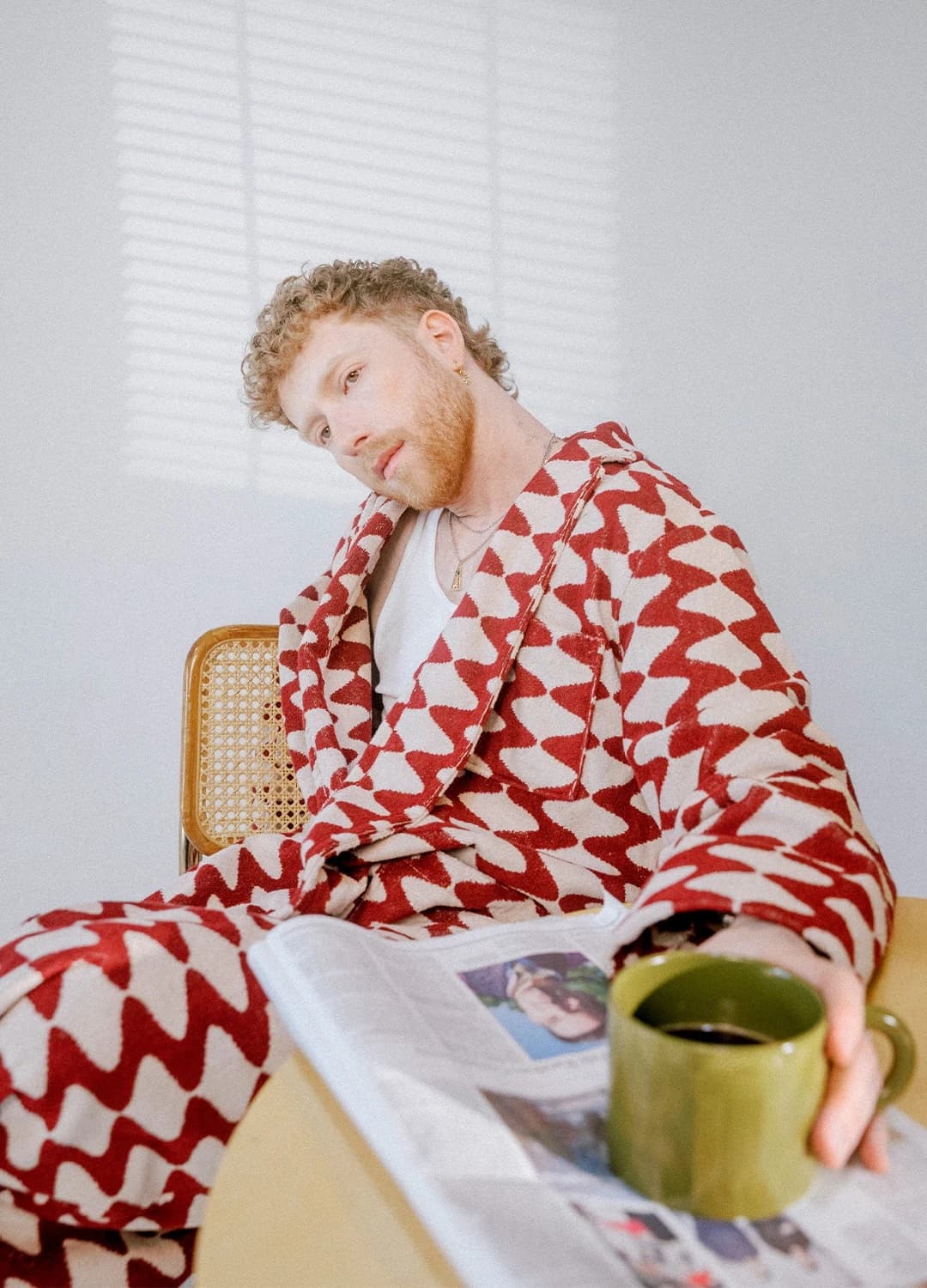
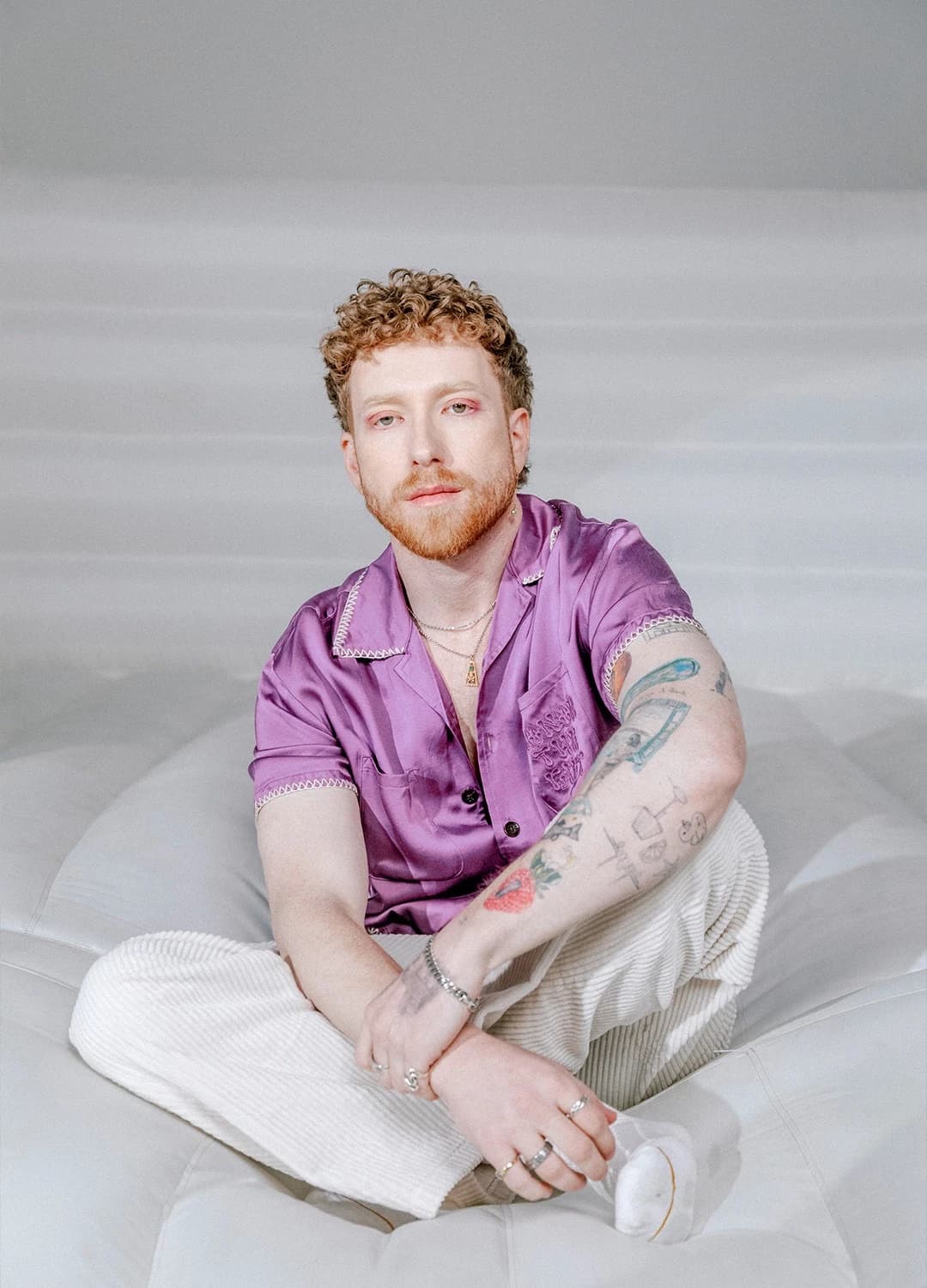
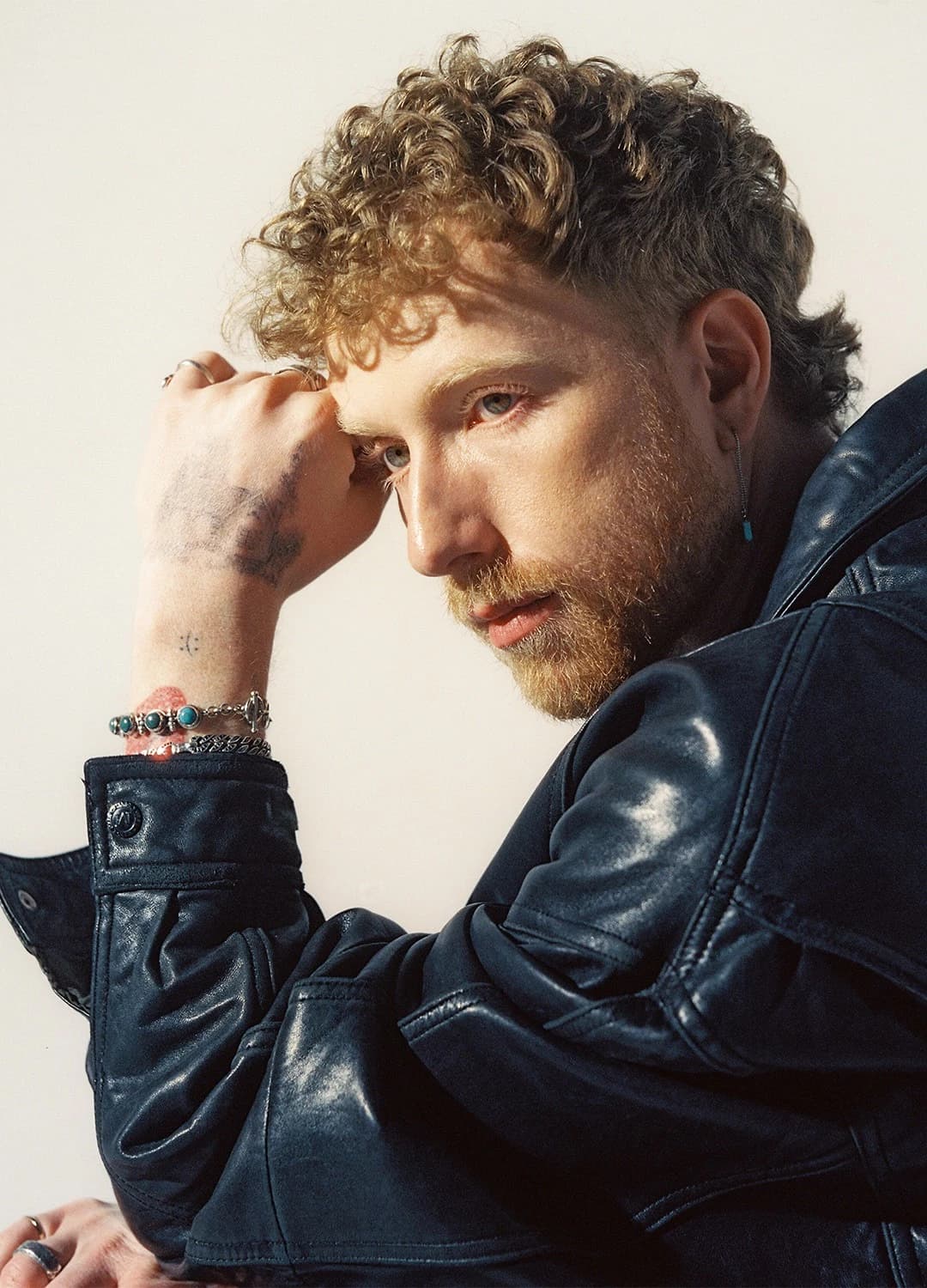
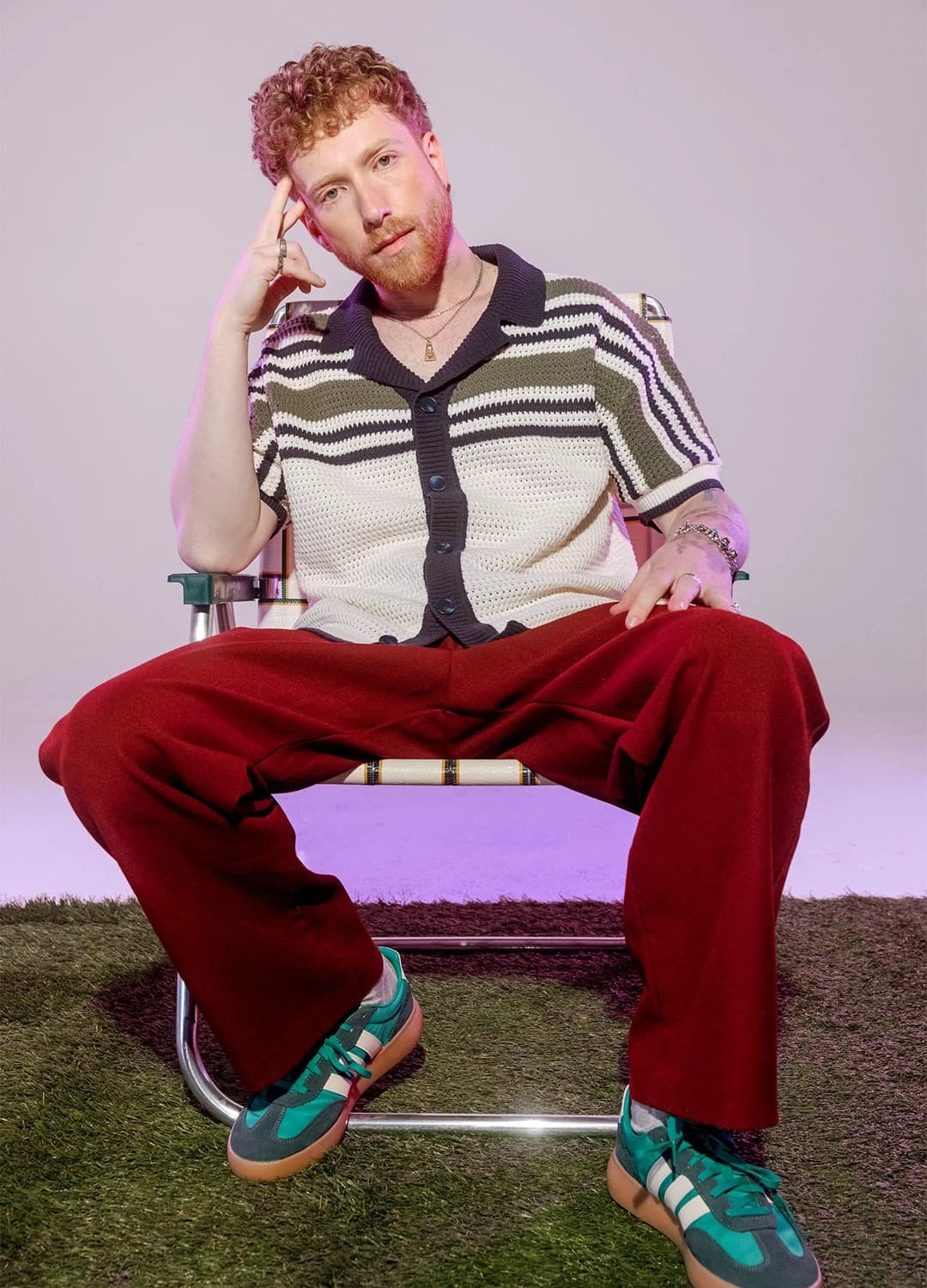
“There's something extraordinarily empowering about taking the parts of your life that you might feel the most shame or embarrassment or fear about, and then hearing thousands of people sing along to it with you,” he told me. “My favorite art is the kind that allows me to access a part of myself, a part of my emotional experience I don't know how to get to without the art.”
This year has already brought us plenty of that sort of emotionally rich art from JP. 2025 has seen the Grammy-nominated songwriter release a pair of records full of the quintessential soul-baring he’s known for. Part one, Articulate Excuses, is about examining and owning up to the ugly parts of yourself, or, as he put it, “a lot of it is me, quote unquote, ‘satirizing my bullshit,’ but it's far less satirical than I'd like to say it is.”
This “satire” brings to the table themes of questioning the purpose, role, and expression of masculinity (“SAFE”); the awareness that knowing how to articulate your emotions doesn’t excuse your toxic and manipulative behavior (“LET A GINGER MAKE YOU CRY”); navigation of the desire to grieve while hitting a wall of learned stoicism (“SOFT ASS BITCH”); and having a bit of grace for a past version of yourself who was also trying to figure life out (“OKAY ANYWAY”).
Part two, Make Yourself at Home, is about the effort to move past those ugly parts into being a better person.
“It's fun to own the shit that you aren't proud of about yourself,” JP explained. “But it becomes unethical if you then just lean into it. I'm not trying to lean into it; I'm trying to grow past it.”
And we’re talking real growth here, not just saying the hard parts out loud. JP acknowledged that while talking about your emotions is hard, the real discomfort comes from doing something about them. “One of my toxic traits is that I think the ability to articulate my fuckery somehow excuses it. It doesn't. … I think people mistake artists' ability to articulate their emotions for their ability to navigate their emotions. Like, I'm good at talking about my feelings. I do that professionally. That does not mean I know what to fucking do with them.”
Interestingly enough, there’s one level of self-indulgence he’s opted not to play into: “The self-titled album thing scares me a bit,” he admitted. “Because I think when you self-title an album, you're naming your identity as an artist rather than naming the identity of the art.”
Just because the pair of releases aren’t called Jonathan and Percy doesn’t make them any less representative of the journey JP has been on, which has involved seriously reevaluating his relationship with social media. When we talked, he had recently concluded a 14-week break from all things social network-related.
“If your career does not depend on you being on social media, you should delete it,” he told me bluntly.
“I think we mistake being informed for being overwhelmed.”
For JP, while he’s grateful for the capability to pick up a phone and say something that has the chance to touch someone on the other side of the planet, he’s also very aware that the internet is a double-edged sword and can damage his own creative drive. In his time away from the small screen, JP wrote, co-produced, and finished much of the music from these albums; wrote half a book of poetry; and started on a script for another project. To say the man found his flow is an understatement.
Now, obviously a social media fast won’t unlock the “hidden 90% of your brain” and make you a creative savant or whatever, but for JP, the break made him crave creation on a deeper level. “Validation is very motivating for me,” he shared. “If my validation comes in the dopamine hit of a comment or a like or a DM, I can't use that well of enthusiasm-providing energy — my desire for validation — to do bigger and more involved projects.” In other words, he’d rather get his validation from writing something emotionally resonant and authentic rather than the dopamine equivalent of a drive-thru.
Beyond his own personal creative drive, JP is concerned that social media is harming our ability to connect to each other in real and meaningful ways. “It's the illusion of community. I think in most cases you can only care about so many people, and once you start trying to care about too many people — even if you're the most empathetic person in the world — you're diluting your ability to give a shit. I think we as humans are only able to give a shit about so many people in so many places.” Despite his career depending on those online spaces in many ways, it’s these sort of concerns that led him to pen the track “SMARTPHONE MAKE ME DUMB.”
“I'm not telling anyone else what to do,” he said. “But for myself, if my job did not require social media, I would not be out there. I would just be texting my friends.”
Of course he would. Being there for his close friends is one of two extremely wholesome things that JP apparently gets absolutely stoked about.
“I cry when my friends win at things. I really like watching my friends win at things. … Watching people I love win is probably my favorite feeling,” he said.
The only time he might not enjoy seeing them win? Well, that’s second:
He’s (and I quote), “fucking relentless at Bananagrams.”
JP’s comfortability in uncomfortable spaces is also a core part of his everyday interactions and approach to interpersonal relationships. While he cares deeply about those around him, he also doesn't avoid the uncomfortability that can come from speaking one’s mind and breaking from the norm. He isn’t afraid to be himself, no matter the formality of the setting, his familiarity with the people around him, or whether the norms would typically demand something else. JP clearly holds nuanced, complex opinions about social issues, politics, and was very willing to share that inner complexity with those of us around him on set that day.
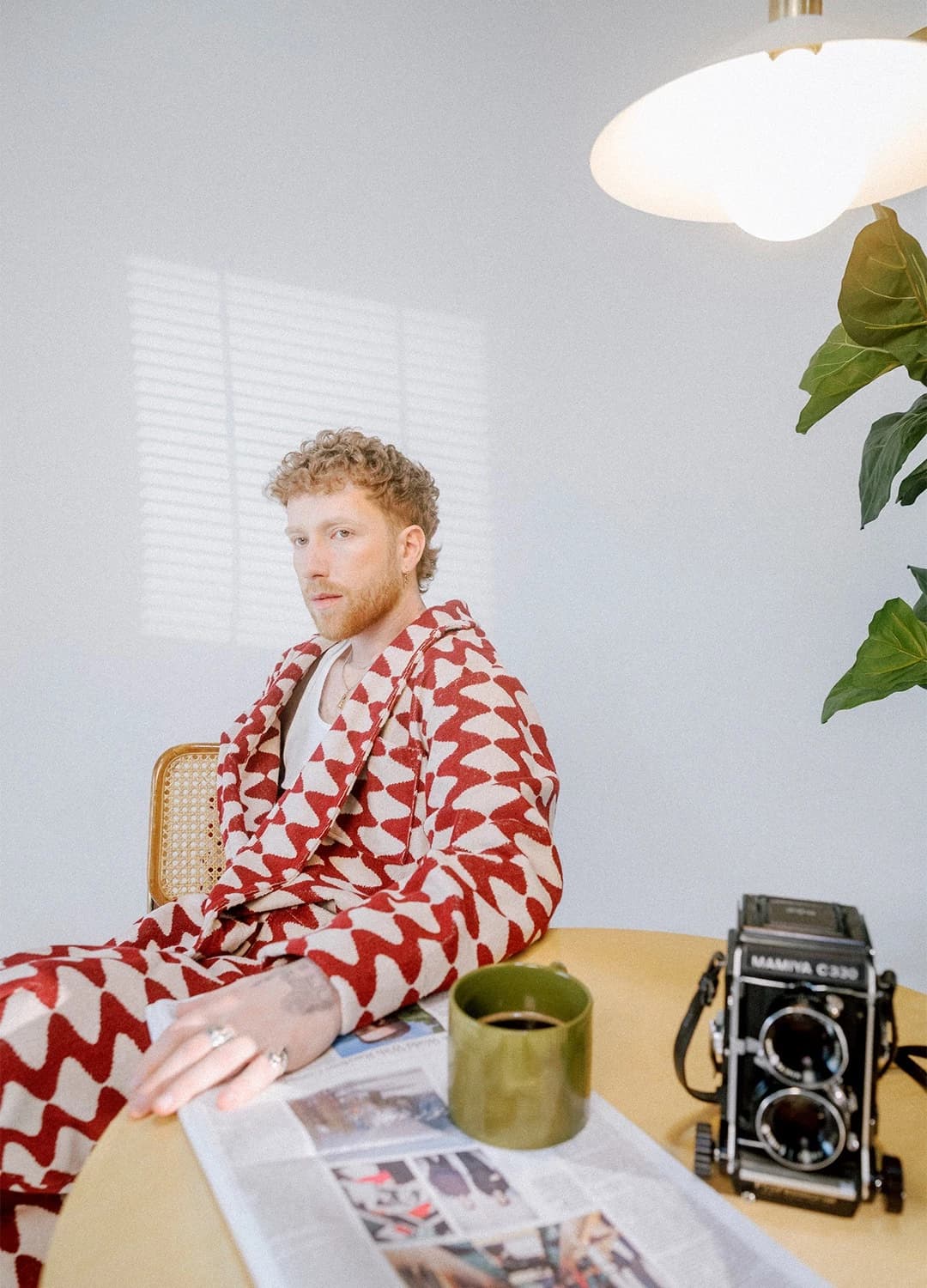
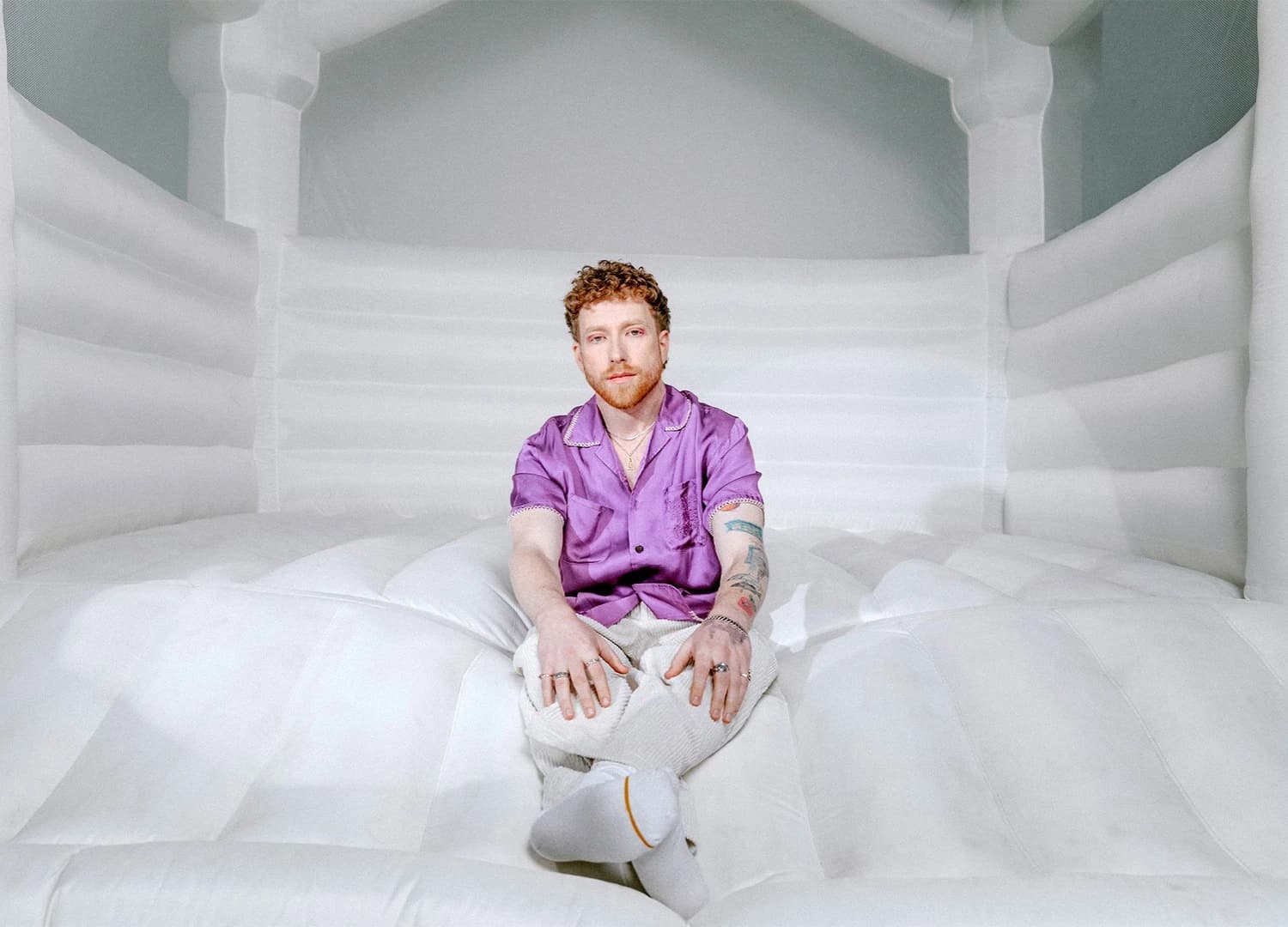
That’s not to say he’s unpleasant to work with, though. Six hours into production, I asked how he was holding up. Standing there, in a totally unfamiliar location, having shared a litany of unreleased material earlier (not to mention having also posed shirtless in a bath robe on an inflatable bouncy castle in front of total strangers), I was expecting at the very least the smallest of murmurs. Instead, I was greeted with a cheery “Doing great!” as he dove into a tangent about how excited he was to be making art with other people and how collaborative visions are so exciting to him.
He later told me collaboration has fueled a lot of his creative process. “I take more inspiration from non-musical artists than I do from musical artists,” JP said. “Because my own ability to analyze music sometimes gets in the way of me understanding the impact of the art itself.” While he’s able to dissect a Billie Eilish track and figure out why it makes him feel how it does, recreating that feeling in his own music would be derivative because he’d end up using similar elements. But for paintings, architecture, movies, and shows like Ted Lasso (a particular favorite of his at the time), it’s more of a creative journey to explore those same emotions through music.
And when it doesn’t quite work out?
“The failure to get the connection right is what becomes the cool thing. … It's the aiming for that thing, not quite getting there, but then arriving somewhere else that's cool. I've never once made something I intended to make.”
I have to agree. I might be a bit biased, but my favorite versions of these new tracks come from the semi-improvisational sessions done that morning at June Audio where he was exploring each song in a very experimental style, just finding out where he’d arrive. Stripped back to just JP and his instrument, these recordings display the compositions at their most raw and intimate. There’s no rehearsed polish, no overdubbing — just a man expressing himself through voice and piano. His songwriting is inherently personal, private, and pure, but when there aren’t any production flourishes to distract the listener, you really feel every word, every note. You have no choice but stand face-to-face with the introspection he embodies. Those of us in the control booth were floored by the (sometimes brutal) honesty of the lyrics in these new songs.
Afterwards, he commented, “Sometimes the most mystical things that happen happen as you are figuring it out because [you’re] reacting to it for the first time. It becomes improvisational, which is fun. I enjoy letting shit happen as I just explore the songs in their infant stages … I'm playing these songs for the first few times. So there's something fun in that.”
JP is also very aware he’s not the only one exploring his compositions. We discussed the theory of “the death of the author” — the idea that once a piece of work is released into the world, the original creator loses the ability to dictate what the meaning and interpretation of their art is. For JP, his songs have occasionally found new meaning in the context of events happening outside his control. For example, “If the World was Ending” was recontextualized by the COVID-19 pandemic, and, to a lesser extent, “SAFE” found additional depth after the LA wildfires earlier this year.
But to JP, once a song is released, he feels secure that he has said what he wanted to and is just happy it resonates with someone else, no matter what their take is. “I would rather they give a shit in a way that differs from my intention than not care,” he laughed. “So if they care enough about it to have an association of any kind, I'm grateful for that.”
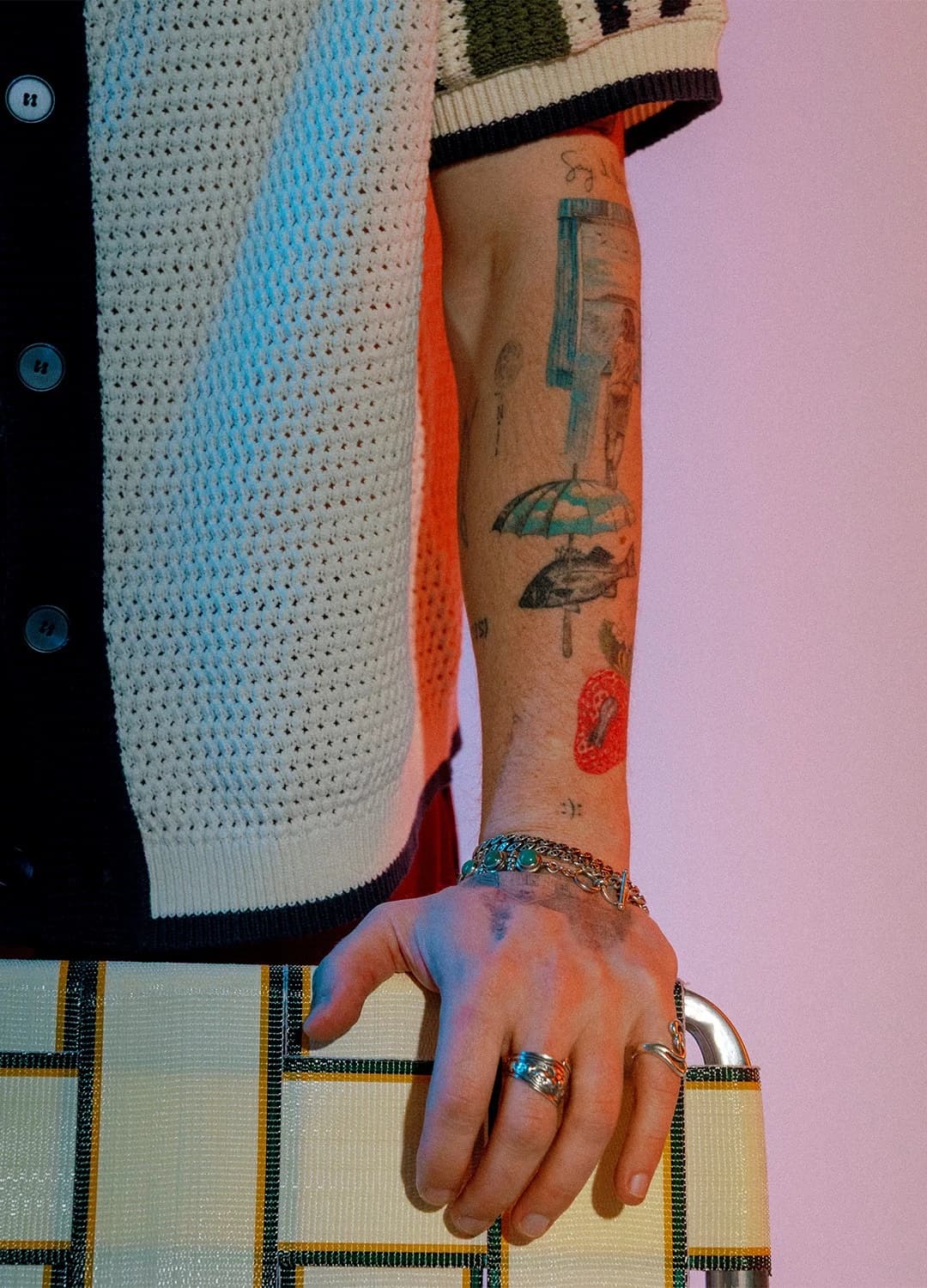
And that gratitude makes sense. I could tell beneath that ease with his complex and most personal emotions is a desire to make other people feel heard, felt, and seen like he is — and to invite them into that zone of comfortability within discomfort. At one point, I overheard him explaining his tattoo of a cabin as a way of bringing the mindset of home with him instead of depending on a physical building to carry that feeling for himself or others. It’s not about forcing someone to face the hard parts of themself, it’s about inviting them in and showing them they can take this at their own pace and in the ways that resonate with them.
“I want people to be able to cry silently at the show, but also cry very loudly together. … Crying is my favorite clapping.”
He went on to explain that music has the power to connect people to those deeper parts of themselves, commenting, “I think there's something really mystical in the emotions we feel without telling ourselves to. Physical reaction like that is something so special, so human, so connected. I love the way live music events can facilitate that. So we'll do it with nuance and we'll do it with small intimate moments [on the record], but I want there to be that climax of us fucking screaming together [live] too.”
So for those of us without stadiums full of fans crying and screaming together, how do we begin to build that connectivity and our own comfort within discomfort? JP seemed to suggest it begins with taking care of those immediately in your circle. “If I don't directly occupy my brain with a social media feed, and I instead go like, ‘Okay, who have I been thinking about lately? Who is on my mind? Who have I not checked in with in a while?’ — and then fucking text them — I think that makes for a less anxiety-inducing, more intimacy-friendly community of life.”
Once again, the guy was off social media for over three months straight; he might have a point.
So yeah, to be seen deeply is a truly terrifying experience, but for JP Saxe, that’s the point of it all. It’s worth it to be uncomfortable. As he put it:
“I want to say the sincere things and I don't want to think about really anything other than whether it's honest.”
Make Yourself At Home and Articulate Excuses are out everywhere now.