
Movie Review
EMILIA PÉREZ

by Anwaya Mane
Cast: Zoe Saldaña, Karla Sofía Gascón, Selena Gomez, Adriana Paz, Mark Ivanir and Édgar Ramírez // Written by Jacques Audiard // Directed by Jacques Audiard
Emilia Pérez is not the groundbreaking film about gender and identity it believes itself to be.
A Spanish-language, French musical-crime-thriller featuring three powerhouse female actors already seems like a surefire hit. However, upon checking online, I found it's one of the most controversial films out there in recent times. Cinephiles have heavily criticized it, and the internet erupted over Karla Sofía Gascón’s reckless remarks, overshadowing the film, Emilia Pérez, itself.
What could have gone so horribly wrong? I decided to watch and figure it out for myself. Zoe Saldaña plays Rita Mora Castro, a struggling yet compassionate attorney based in Mexico City, who receives an anonymous call with a strange but mind-boggling offer. Reluctantly, she agrees to meet the client who made this lucrative proposition, only to find out that it’s cartel kingpin Juan "Manitas" Del Monte, played by Karla Sofía Gascón. Manitas reveals his long-term desire to undergo gender-affirming surgery and embrace a new life as a woman—something he’s always wanted to do.
Rita consults with doctors in Bangkok and selects a surgeon who agrees to perform the surgery after being persuaded by Manitas' childhood struggles with gender dysphoria. To ensure his family's safety, Manitas arranges for his wife, Jessi (Selena Gomez), and their children to be relocated to Switzerland. He then fakes his own death, adopts a new identity, and takes on the name Emilia Pérez. Finally, Manitas embraces his new life as Emilia, living as the woman he had always dreamed of becoming.
Four years after her gender-affirming surgery, Rita and Emilia Pérez meet by chance in London, where Emilia confides in Rita about her desire to reunite with her children. Rita arranges for Jessi and the kids to return to Mexico City and live with Emilia, telling them that she is a wealthy, distant cousin of Manitas who wants to connect with them after his "death." Jessi does not recognize Emilia's true identity and initially refuses the arrangement. After much persuasion, she finally agrees and, in doing so, crosses paths with Gustavo Brun—her former lover with whom she had a secret affair while married to Manitas.
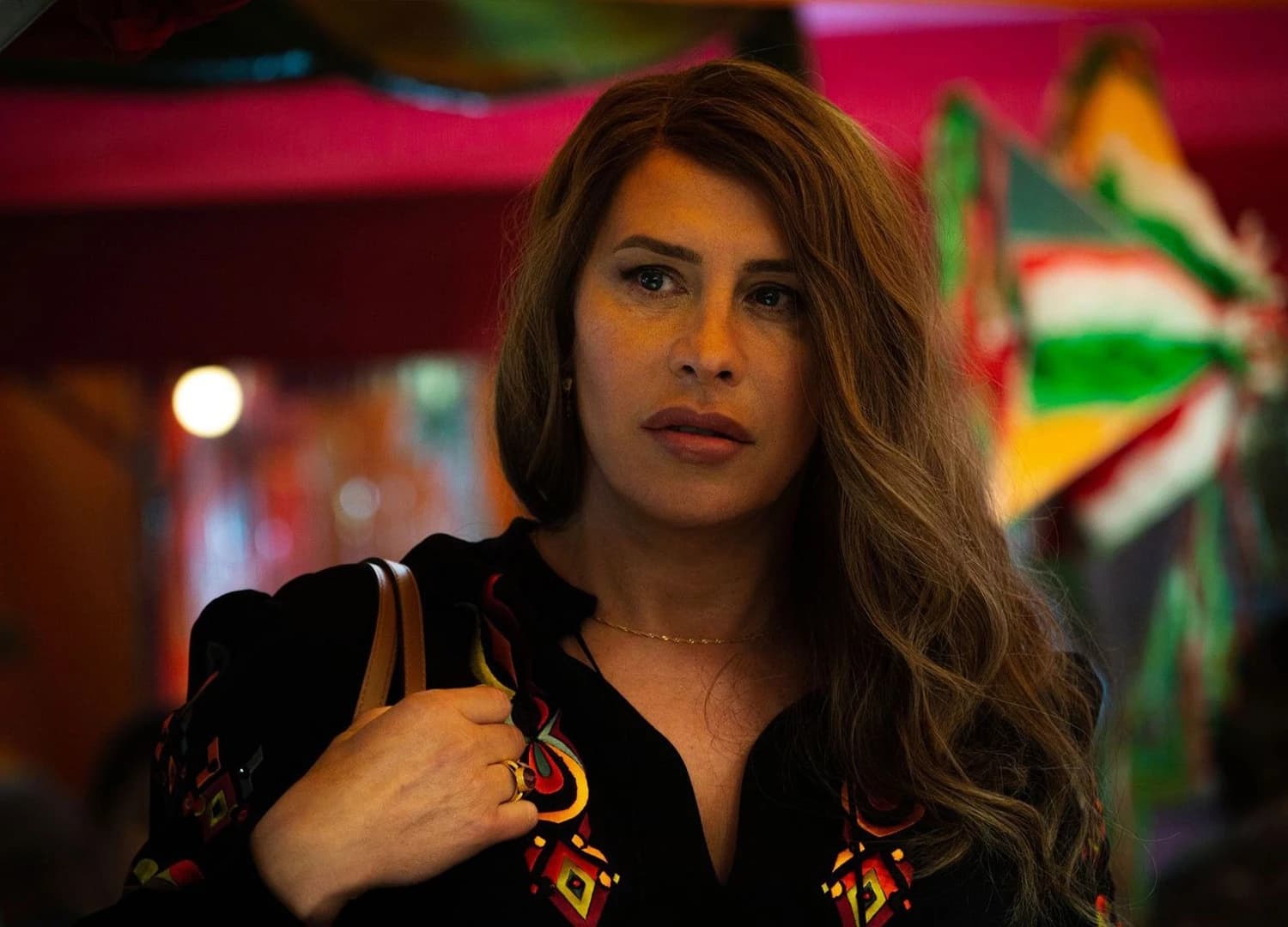
Emilia is happy to be reconnected with her wife and children. While putting her son to bed, Emilia is overcome with emotion when he mentions recognizing her scent as that of his father. This remark makes her reflect on her criminal past as the notorious cartel leader, Manitas, and she feels a deep sense of remorse. Determined to make amends, she decides to team up with Rita once more to establish a nonprofit initiative that identifies the bodies of cartel victims and helps reconnect them with their families and loved ones. Rita cautions Emilia that this mission will be a tough and challenging journey. Through this nonprofit initiative, Emilia meets Epifanía, one of the victims who endured immense abuse at the hands of her now-deceased husband. Over time, Emilia and Epifanía develop a relationship.
Jessi and Gustavo are back together in a steady relationship, and Jessi informs Emilia of her plans to marry, move in with Gustavo, and bring the children along. Emilia reacts strongly, referring to the children as "mine," which leads to a heated confrontation between her and Jessi. In the heat of the moment, they engage in a violent altercation.
Terrified, Jessi flees with the children, and in retaliation, Emilia cuts off her financial support and threatens Gustavo, demanding that he leave Mexico. Emilia hopes this will force Jessi to return with the kids. However, in a shocking turn of events, Jessi and Gustavo kidnap Emilia and demand a ransom from Rita in exchange for her release. As a chilling warning, Rita receives a package containing several of Emilia's severed fingers. Concerned for Emilia’s safety, Rita goes to the designated meeting spot in an attempt to negotiate with Gustavo and rescue Emilia. But things quickly spiral out of control, and a shootout erupts.
In a moment of intense pain and bleeding heavily, Emilia confesses her true identity to Jessi, expressing her love and recalling their first meeting, wedding, and the happier times they shared as a family. Overcome with guilt, Jessi realizes her mistake and tries to help Emilia escape. She holds Gustavo at gunpoint, ordering him to pull over the car, but he refuses to comply. A violent internal struggle ensues between Jessi and Gustavo, which tragically results in the deaths of Emilia, Jessi, and Gustavo. Heartbroken and shattered, Rita tells Emilia and Jessi's children the truth about their father and offers to become their guardian. The film ends on a sombre note, with Epifanía and Rita singing Emilia's eulogy, honouring the courageous life of love and truth she lived, and the ideals she so passionately believed in.
Let me start by mentioning the things I appreciated before diving into the negatives. The cinematography is outstanding; every frame is visually stunning and beautifully shot. Hollywood is often criticized for portraying other countries in a particular light—both literally and figuratively—with undertones of racism.
However, Paul Guilhaume, who has also earned an Academy Award nomination for his work on this film, has done an exceptional job. The color grading in the film is lovely. Karla Sofía Gascón and Zoe Saldaña are both fantastic in the titular roles and truly deserve a better movie than Emilia Pérez to showcase their acting talent. Despite Karla Sofía Gascón's controversial behavior, it is remarkable that she has become the first openly transgender actress to be nominated for an Academy Award. As for Selena Gomez, I really admire her music and the graceful public figure she is, but as for her acting in the movie... well, let's just say the less said, the better. In other miscellaneous thoughts: Spanish is genuinely a beautiful language to listen to.

The negatives are quite a few, so grab a nice cup of coffee because this will be a lengthy read. While watching the film, I kept wondering: What exactly is the purpose of this movie? Is it meant to be a groundbreaking exploration of gender and identity? Is it supposed to be a nail-biting thriller? (Spoiler: it’s not). Emilia Pérez is a crime-thriller drama presented in a musical format, where the characters sing their dialogues instead of speaking them. This made me wonder: Is this how Bollywood films sound to foreigners? The sudden bursts of song were more jarring than intriguing or plot-driven. It felt like the musical element belonged to a different film entirely, and not in this grounded, human drama.
At 132 minutes, which is about the average length of feature films nowadays, the screenplay feels unevenly paced. I found myself getting distracted, frequently reaching for my phone, and starting to believe that maybe the internet was right after all—that perhaps this wasn't such a great film. The film has been a flop in Mexico, with native Spanish speakers expressing concerns about the authenticity of the Spanish used in the movie. While I don’t speak Spanish, I am aware that the Spanish spoken in Mexico differs from that in other Spanish-speaking countries.
Despite receiving an impressive 13 nominations at the 2025 Oscars, just one shy of the record for the most nominations by a single film, I’m still trying to fully grasp Emilia Pérez. An insightful report by Alejandra Marquez Guajardo, Assistant Professor of Spanish at Michigan State University, helped me better understand the film's criticism from cultural, gendered, linguistic, and appropriation perspectives.
Jacques Audiard is a French filmmaker who chose to make the film in Spanish, despite admitting to having limited knowledge of the language and the culture of the country where the film is set. There's nothing inherently wrong with that—some of the greatest filmmakers have worked in languages other than their own. For example, Hirokazu Kore-eda, who has primarily directed in Japanese, has also made films in English, and South Korean filmmaker Bong Joon-ho has ventured into English-language films as well. However, I believe Emilia Pérez offers an outward-looking perspective on gender, identity, and violence, rather than an inward-looking one.
I have limited knowledge about the violence, corruption, and drug trafficking prevalent in Mexico, much of which I’ve learned from popular TV shows focused on the topic. However, critics of Emilia Pérez have argued that the writing is superficial, failing to acknowledge the role the U.S. has played in fueling drug trafficking in Mexico, particularly through its opioid crisis, or the devastating reality of gun violence in America, which likely extends beyond its borders.
Emilia Pérez lacks empathy in its portrayal of gender and violence, positioning the country as an accomplice or enabler rather than a victim in need of attention. While the film attempts to portray gender and identity sensitively, the depiction of the trans character falls short, despite Karla Sofía Gascón's talent. President Trump has expressed his anti-LGBTQI stance through recent press statements, fueling further anti-trans sentiment.
After receiving a starry reception on the film festival circuit, including a notable appearance at the prestigious Cannes Film Festival last year, Emilia Pérez was finally released in the U.S. around the time when Donald Trump defeated Kamala Harris to secure a second term as president. It’s no secret how Trump has expressed his views on Mexico—attempting to curb illegal immigration, feuding with the Mexican president over border policies, and imposing tariffs.
With the people of Mexico, critics, cinephiles, and the general audience making their stance on Emilia Pérez loud and clear, it remains to be seen which side of history the Annual Academy Awards will align with.
Emilia Pérez is streaming on Netflix.